Best Government Schemes for Women Entrepreneurs in India
India has introduced several government schemes to help women start and expand businesses by providing financial assistance, skill development, and training opportunities.
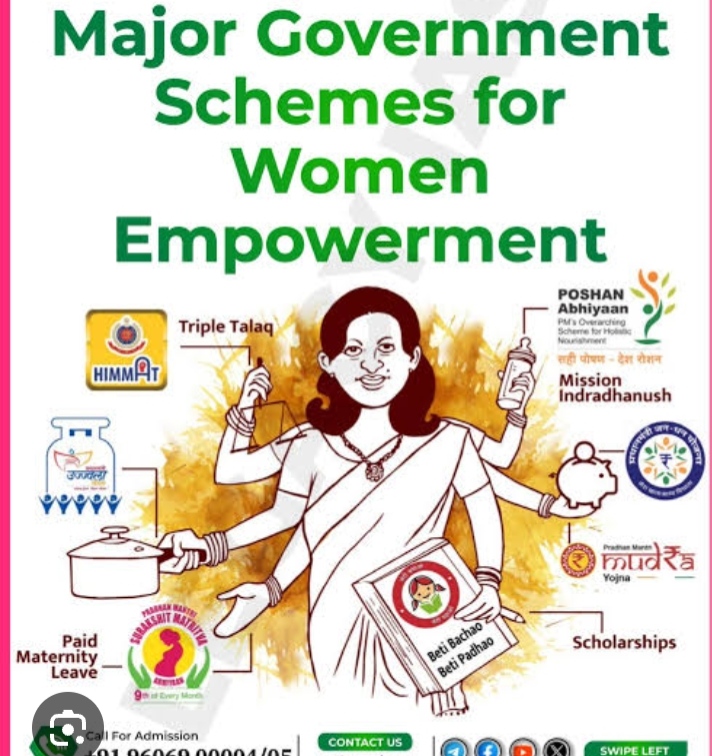
Women in India are increasingly choosing entrepreneurship as a path to build businesses and achieve their professional goals. A 2020 study by Bain & Company and Google estimated that India had approximately 13.5–15.7 million women-led enterprises. Recognising the growing contribution of women entrepreneurs, the Government of India has launched several initiatives to provide them with financial assistance, skills, guidance, and other forms of business support.
The following sections highlight some of these programmes and explain how financial protection, including life insurance, can play an important role in protecting women entrepreneurs and their families.
Top Government Schemes
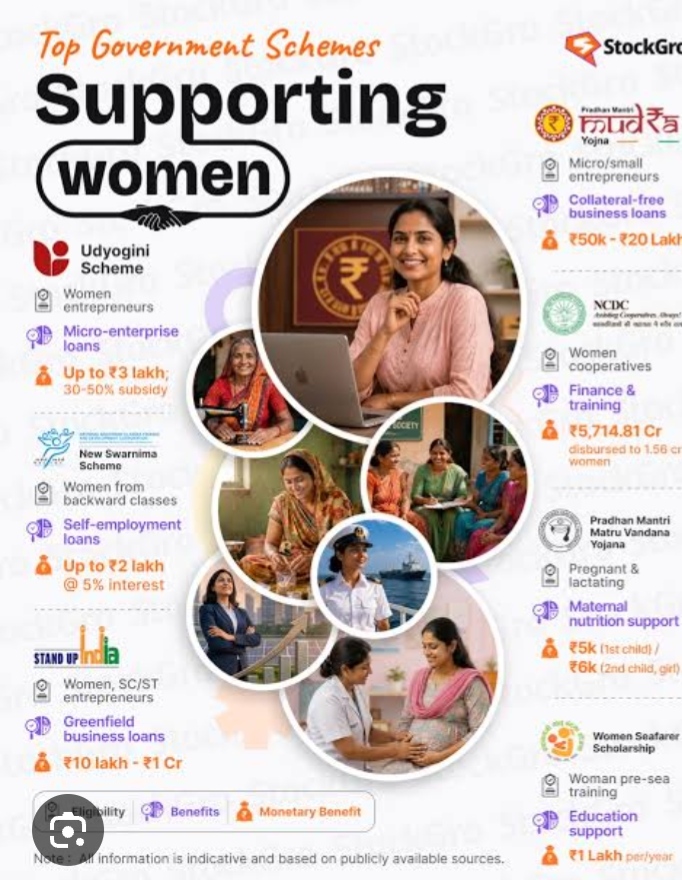
Stand-Up India Scheme: This scheme helps women establish new businesses by providing bank loans ranging from ₹10 lakh to ₹1 crore. You can use the loans for new enterprises in manufacturing, services, or trading.
Pradhan Mantri Mudra Yojana (PMMY): PMMY provides collateral-free loans of up to ₹10 lakh to support small and micro businesses. The scheme offers three categories of loans: Shishu, Kishore, and Tarun, based on the stage and requirements of the business.
Udyogini Scheme: Under this scheme, women between 18 and 55 years of age from economically weaker families can receive subsidized loans of up to ₹3 lakh. The financial support can be used to establish small businesses in 88 approved activities.
Annapurna Scheme: This scheme provides loans of up to ₹50,000 to women who want to start food-related or catering businesses. The funds can help them purchase kitchen equipment, utensils, and necessary raw materials.
TREAD Scheme (Trade Related Entrepreneurship Assistance and Development): The scheme supports women entrepreneurs through a combination of government grants, bank finance, and training. Government assistance can cover up to 30% of the project cost, while the remaining 70% can be financed through bank loans. Training and counselling are also provided to help women develop their businesses.
It serves as a central platform developed by NITI Aayog, helping women entrepreneurs access mentorship, build professional networks, and find suitable financial support.
Initiatives like Stand-Up India, Mudra Yojana, WEP, and STEP support women in business through financial assistance, skill-building programmes, mentoring, and other forms of entrepreneurial support.
Access to finance, entrepreneurship training, and professional networks can help women address common difficulties such as lack of credit, limited market access, and gaps in business skills.
Special loan programmes offered by banks, along with credit guarantee facilities, can make it easier for women-owned MSMEs to obtain affordable finance for setting up, expanding, or upgrading their businesses.
Life insurance can provide additional financial protection by helping safeguard families, maintain business stability during difficult times, and contribute to long-term financial planning and wealth creation.
Types of Government Schemes in India
The Government of India has introduced various programmes to help women entrepreneurs gain access to finance, mentoring, training, and other forms of business support. One of the important initiatives in this area is the Stand-Up India Scheme.
1. Stand-Up India Scheme
The Stand-Up India Scheme promotes entrepreneurship among women and members of the SC/ST communities by helping eligible applicants obtain institutional loans for setting up new businesses.
Key features:
Eligible applicants can obtain bank loans ranging from ₹10 lakh to ₹1 crore.
The scheme supports new (greenfield) enterprises in areas such as manufacturing, services, trading, and agri-allied activities.
Women entrepreneurs aged 18 years or above can apply.
In the case of a non-individual enterprise, women should hold at least 51% of the ownership and controlling interest.
The applicant should not have an existing loan default with any bank or financial institution.
Pradhan Mantri Mudra Yojana (PMMY) for Women
The Pradhan Mantri Mudra Yojana (PMMY) helps women who run micro and small businesses obtain credit without the need for collateral, subject to the applicable lending conditions.
Key features:
Eligible women entrepreneurs can receive loans of up to ₹10 lakh.
The scheme can support businesses in manufacturing, services, retail, and other non-farm activities.
Collateral is generally not required for eligible Mudra loans, subject to the applicable rules.
Borrowers may get a flexible repayment period, generally between 3 and 5 years, depending on the loan and lending institution.
PMMY offers different loan categories according to the stage and funding needs of the business:
Shishu: Loans up to ₹50,000.
Kishor: Loans above ₹50,000 and up to ₹5 lakh.
Tarun: Loans above ₹5 lakh and up to ₹10 lakh.
Women Entrepreneurship Platform (WEP)
The Women Entrepreneurship Platform (WEP), launched by NITI Aayog, serves as a digital platform designed to bring together aspiring and established women entrepreneurs and help them access important business-related resources.
The platform provides support in several areas, including:
Mentorship and networking: Helps women connect with mentors, experts, and other entrepreneurs.
Funding and investment: Provides information and access to suitable funding and investment opportunities.
Incubation and acceleration: Connects entrepreneurs with programmes that help develop and expand their businesses.
Marketing support: Offers assistance and resources to improve business promotion and market reach.
Compliance and taxation: Guides important regulatory, taxation, and compliance matters.
Skills and learning: Gives women access to workshops, training programmes, and other learning resources.
Trade Related Entrepreneurship Assistance and Development (TREAD) Scheme
The Trade Related Entrepreneurship Assistance and Development (TREAD) Scheme is aimed at helping women from economically weaker backgrounds become entrepreneurs. It works mainly through NGOs that assist women with finance, training, and other business-related support.
Key features include:
The government can provide a grant of up to 30% of the total project cost.
The remaining portion of the project cost can be arranged through eligible lending institutions.
Participating NGOs can receive support for entrepreneurship training, counselling, marketing assistance, and capacity-building activities.
Training organisations may also receive grants to conduct Entrepreneurship Development Programmes (EDPs) for women.
Support to Training and Employment Programme (STEP) for Women
The Support to Training and Employment Programme (STEP) is designed to help women develop practical skills and improve their chances of earning a livelihood through employment or entrepreneurship. The programme provides structured training in different areas to support women's economic participation.
Key benefits include:
Provides skill development and vocational training in various sectors.
Encourages women to develop entrepreneurial and business-related skills.
Helps participants improve their employment prospects.
Promotes self-employment and the establishment of small businesses.
Women aged 16 years and above from different parts of India can participate in the programme, subject to the applicable scheme guidelines.
FAQs: Best Government Schemes for Women Entrepreneurs in India
1. What government schemes are available for women entrepreneurs in India?
Several government initiatives support women entrepreneurs through finance, training, mentoring, skill development, and business assistance. Important programmes include Stand-Up India, Pradhan Mantri Mudra Yojana (PMMY), Women Entrepreneurship Platform (WEP), TREAD, and STEP.
2. What is the Stand-Up India Scheme for women?
The Stand-Up India Scheme facilitates bank loans for eligible women entrepreneurs to establish new greenfield enterprises in sectors such as manufacturing, services, trading, and agri-allied activities.
3. Can women get loans under Pradhan Mantri Mudra Yojana?
Yes. Eligible women entrepreneurs can obtain Mudra loans for micro and small business activities. PMMY categorises loans into Shishu, Kishor, and Tarun according to the amount and business requirements.
4. What is the Women Entrepreneurship Platform (WEP)?
WEP is an initiative of NITI Aayog that connects women entrepreneurs with resources such as mentoring, networking, funding opportunities, learning programmes, and business support.
5. What does the TREAD Scheme offer to women?
The Trade Related Entrepreneurship Assistance and Development (TREAD) Scheme supports women from economically disadvantaged backgrounds through financial assistance, entrepreneurship training, counselling, and capacity-building support, primarily through eligible NGOs and institutions.
6. What is the STEP Scheme?
The Support to Training and Employment Programme for Women (STEP) focuses on improving women's skills and employability through training. It also encourages self-employment and economic independence.
7. Do government schemes provide training as well as financial support?
Yes. Depending on the scheme, women may receive access to vocational training, entrepreneurship development, mentoring, counselling, networking, or financial assistance.
8. Can women use these schemes to start a new business?
Many of these initiatives are designed to support women who want to establish or develop businesses. However, eligibility, loan limits, documentation, and other conditions vary between schemes.
9. Do women entrepreneurs always need collateral to obtain government-supported loans?
Not necessarily. Some programmes provide loans without collateral, subject to the applicable rules and lending conditions. Applicants should check the current requirements of the relevant scheme and lending institution.
10. How can women apply for government entrepreneurship schemes?
The application process depends on the particular scheme. Women can check the official government scheme portal, participating banks, financial institutions, or implementing agencies for current eligibility requirements, documents, and application procedures.