Introduction
Imagine a room where 193 nations—regardless of their wealth, population, or military might—each get exactly one vote. Welcome to the United Nations General Assembly (UNGA), the ultimate global forum. From historic debates on war and peace to urgent pleas for climate justice from young world leaders, the UNGA is the world's primary stage for diplomacy.
In this lesson, you will learn:
How the UNGA balances power among its 193 member states.
The difference between regular, special, and emergency sessions of the Assembly.
The unique role of the President of the General Assembly (PGA) and its specialized committees.
How real-world leaders utilize this massive stage to champion critical global issues.
The Mandate of the General Assembly
At the core of the UN General Assembly is a radical diplomatic principle: sovereign equality. Established by the UN Charter, the UNGA is the chief deliberative, policymaking, and representative organ of the United Nations. Unlike the Security Council, where a handful of nations hold veto power, the UNGA operates on a "one country, one vote" system.
The UNGA has a wide mandate, which includes:
Budgetary Decisions: Approving the UN budget and deciding each country's financial share.
Elections and Appointments: Electing non-permanent members of other UN councils and appointing the Secretary-General.
Broad Discussion Powers: Discussing any international issue under the Sun, with one catch: it cannot make decisions on disputes currently being actively considered by the Security Council.
To handle the growing complexity of global challenges, the UNGA undergoes a continuous process called "GA revitalization" to streamline its working methods, improve transparency, and strengthen the institutional memory of its leadership.
GA Sessions and Leadership
The General Assembly does not just meet randomly; it operates in highly structured sessions. A regular annual session opens on the Tuesday of the third week of September and runs for a full year. It is divided into an intense "main part" (September to December) and a "resumed part" (January to September) where thematic debates and consultations take place.
But what happens when an urgent global crisis arises?
Special Sessions (UNGASS): Can be called at the request of the Security Council or a majority of members to address a single pressing issue.
Emergency Special Sessions: Under the "Uniting for Peace" resolution, if the Security Council is deadlocked by a veto from a permanent member during a threat to peace, the UNGA can meet within 24 hours to take action.
Guiding this complex body is the President of the General Assembly (PGA), who is elected annually from rotating regional groups. Interestingly, the PGA has no vote and very little formal executive power. Instead, they rely entirely on moral authority and consensus-building to keep the 193 member states working together.
High-Level Diplomacy in Action
Every September, the UNGA hosts its famous "General Debate," where world leaders gather in New York. This high-level week is a prime opportunity for countries to voice urgent local and global issues on the international stage.
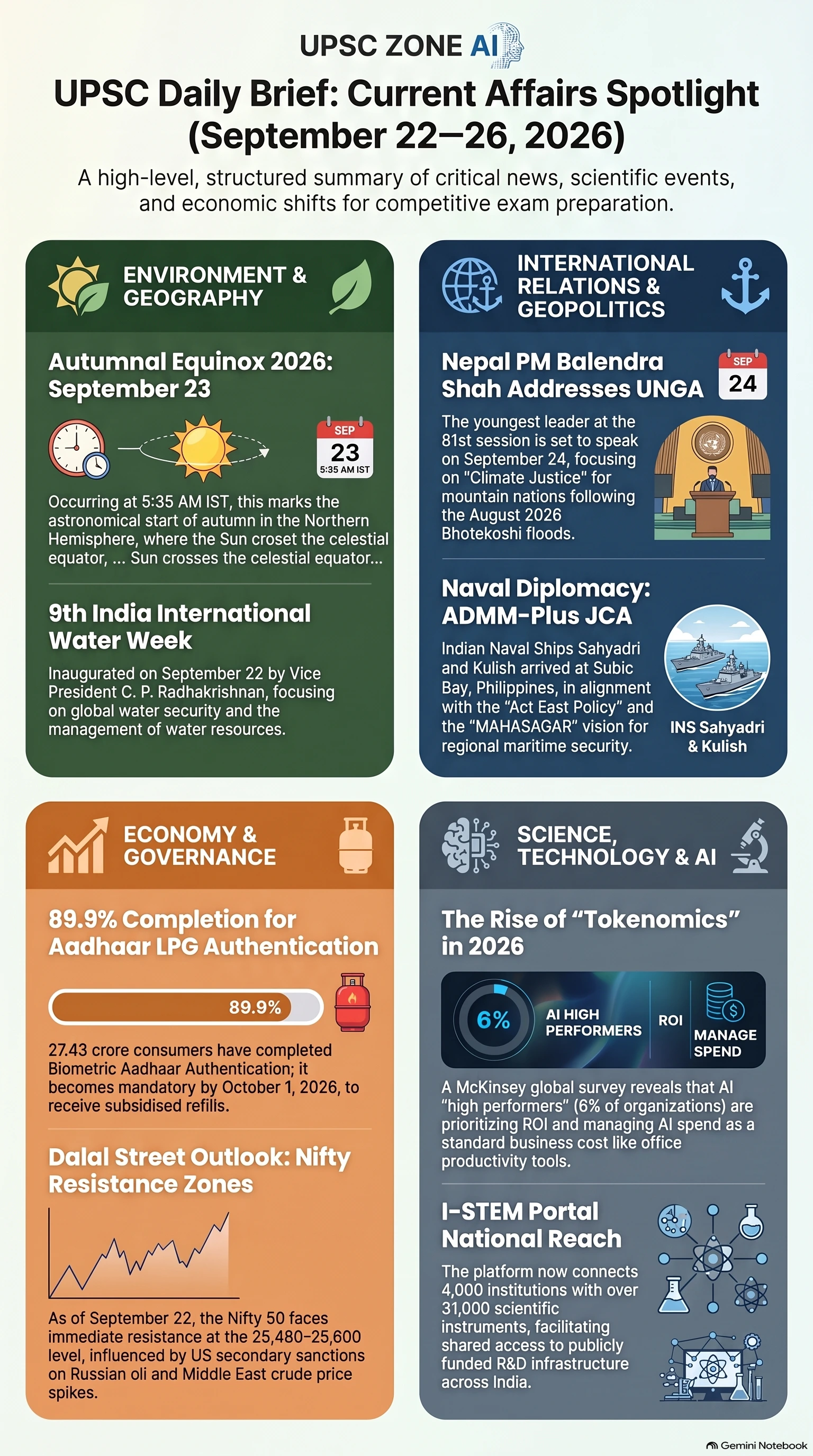
Consider a real-world example: In September 2026, Nepal's Prime Minister, Balendra Shah—who rose to power following a youth-led movement—scheduled an address to focus on climate justice. Nepal, a low-carbon-emitting mountain nation, had suffered devastating downstream floods on the Bhotekoshi River. By taking the UNGA podium, the Prime Minister could directly demand climate compensation and draw global attention to the vulnerability of mountain countries.
Whether it is a superpower discussing geopolitical strategy or a young leader fighting for environmental survival, the UNGA remains the only place on Earth where all voices have an equal platform to be heard.
Key UNGA Diplomatic Terminology

Key takeaways from this lesson:
Sovereign Equality: The UN General Assembly operates on the principle of sovereign equality, granting all 193 member states equal voting power.
Diverse Mandate: The assembly works through a Plenary and six specialized Main Committees covering everything from disarmament to administrative and legal issues.
Crisis Adaptation: Emergency Special Sessions serve as a critical diplomatic safety valve when the Security Council is deadlocked by a veto.
Power of Consensus: The President of the General Assembly (PGA) serves as a neutral guardian of rules, relying on diplomatic persuasion rather than executive command.