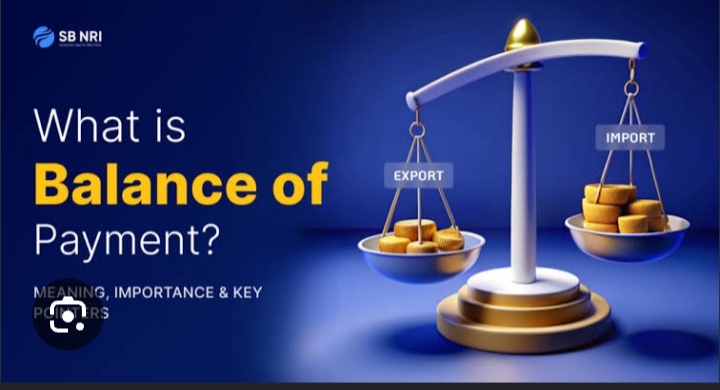
Balance of Payments in India Explained with Examples
The Balance of Payments (BOP) is a detailed record of all financial and economic transactions between a country's residents and people or entities in other countries over a particular period.
What is the Balance of Payments?
The Balance of Payments (BOP) is a financial report that records the money coming into and going out of a country's economy. It keeps track of the economic transactions between India and other countries during a particular period. The BOP is prepared using international guidelines followed by institutions such as the Reserve Bank of India (RBI) and the International Monetary Fund (IMF). When all BOP accounts are considered together, they balance because every international payment made by one country represents a receipt for another.
Main Components of India’s BOP
The Balance of Payments is mainly divided into two major accounts, although some sources classify the financial account separately and consider it as a third account.
1. The Current Account: Balance of Trade (Visible/Goods): This covers the import and export of physical products, such as India importing crude oil, electronic goods, and gold Balance of Trade (Visible/Goods): This covers the import and export of physical products, such as India importing crude oil, electronic goods, and gold while exporting manufactured products and refined petroleum. India generally has a trade deficit in this area.
Services (Invisible): This includes international transactions involving services rather than physical goods. Examples include software and IT services offered by companies such as TCS and Infosys to overseas customers, along with tourism, transport, and shipping services. India usually records a surplus in services.
Primary Income: This refers to income earned through investments and employment across borders, including interest, dividends, and profits received from abroad or paid to foreign investors.
Current Transfers: These are one-way transfers where the recipient does not provide goods or services in exchange. A major example is remittances sent by NRIs working in countries such as the Middle East and the USA. Foreign aid and similar transfers are also included.
The current account records a country’s regular international transactions, including the exchange of goods and services as well as transfers of income and money between residents and other countries.
Balance of Trade (Visible/Goods): This covers the import and export of physical products, such as India importing crude oil, electronic goods, and gold while exporting manufactured products and refined petroleum. India generally has a trade deficit in this area.
Services (Invisible): This includes international transactions involving services rather than physical goods. Examples include software and IT services offered by companies such as TCS and Infosys to overseas customers, along with tourism, transport, and shipping services. India usually records a surplus in services.
Primary Income: This refers to income earned through investments and employment across borders, including interest, dividends, and profits received from abroad or paid to foreign investors.
Current Transfers: These are one-way transfers where the recipient does not provide goods or services in exchange. A major example is remittances sent by NRIs working in countries such as the Middle East and the USA. Foreign aid and similar transfers are also included.
The Capital and Financial Account
The capital and financial account records transactions related to investments, borrowing, and changes in ownership of assets between a country and the rest of the world.
Foreign Direct Investment (FDI): This occurs when an international company, such as Amazon or Google, invests directly in India by setting up offices or factories or purchasing a share in an Indian business.
Foreign Portfolio Investment (FPI) / FII: This involves foreign investors purchasing Indian shares listed on stock exchanges such as the NSE and BSE, or investing in Indian government securities.
External Commercial Borrowings (ECB): These are loans raised by Indian companies or other eligible entities from lenders and financial institutions located outside India.
Foreign Exchange Reserves: These reserves are maintained by the RBI to support the country’s external payments. Changes in these reserves help manage differences between foreign currency inflows and outflows.
FAQs: Balance of Payments in India Explained with Examples
1. What is the Balance of Payments (BOP)?
The Balance of Payments is a systematic record of all economic transactions between the residents of India and the rest of the world during a specific period.
2. What are the main components of India’s BOP?
The BOP mainly includes the Current Account and the Capital and Financial Account. These record trade, services, income, transfers, investments, and borrowings.
3. What is the Current Account?
The Current Account records transactions involving goods, services, primary income, and current transfers between India and other countries.
4. What is the Balance of Trade?
The Balance of Trade is the difference between the value of a country’s exports and imports of physical goods. India generally has a trade deficit because it imports large quantities of crude oil, gold, and electronic products.
5. What are invisible transactions in BOP?
Invisible transactions mainly refer to services, income, and transfers that do not involve the physical exchange of goods. Software services, tourism, and remittances are common examples.
6. Why are services important for India’s BOP?
India earns substantial foreign exchange through IT, software, business, consulting, and other professional services provided to customers worldwide.
7. What are remittances in the Balance of Payments?
Remittances are money transfers sent by Indians working abroad to their families or other recipients in India. They form an important source of foreign exchange earnings for the country.
8. What is the Capital and Financial Account?
It records transactions related to foreign investment, loans, and other financial flows between India and the rest of the world.
9. What is FDI?
Foreign Direct Investment (FDI) occurs when a foreign company or investor makes a long-term investment in an Indian business. For example, a foreign company establishing a factory in India can be considered FDI.
10. What is FPI?
Foreign Portfolio Investment (FPI) refers to investments by foreign investors in Indian financial assets, such as shares and government securities, without taking direct control of the business.